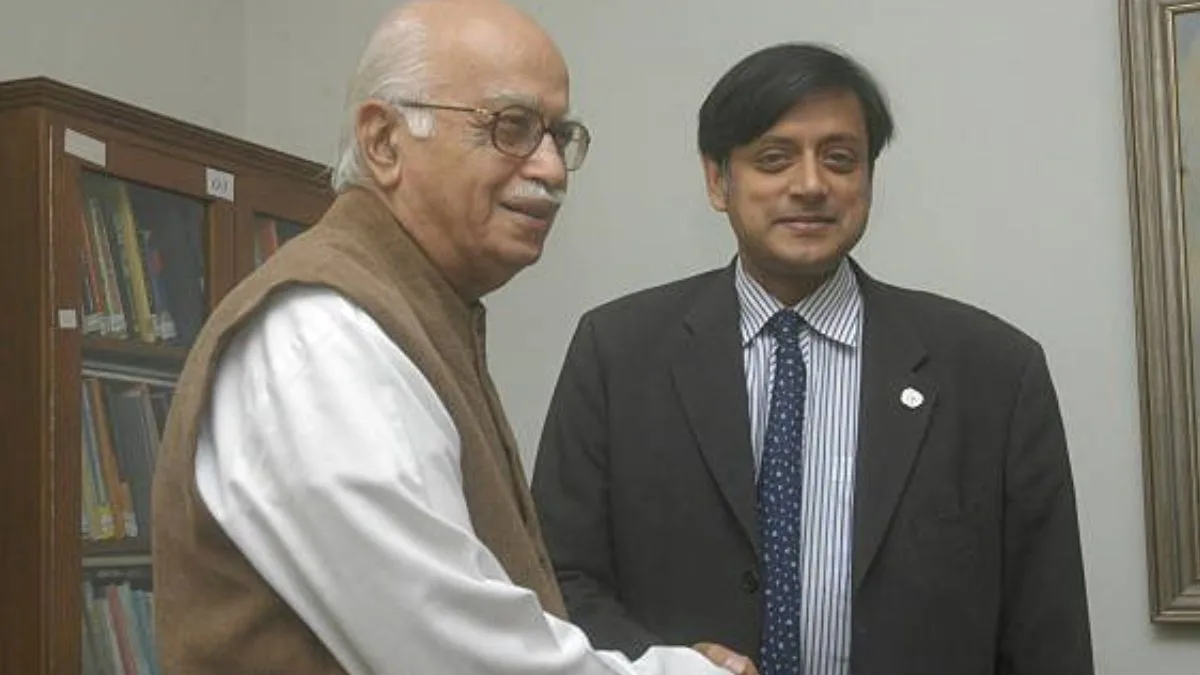
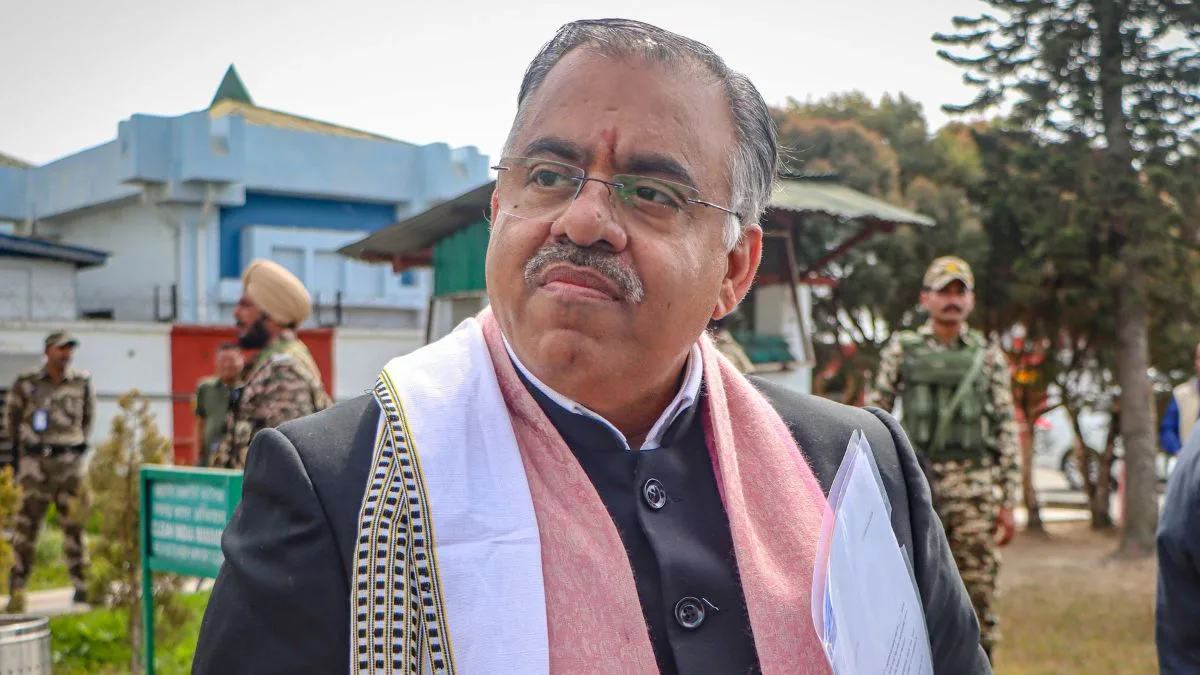
Days after criticising the Nehru-Gandhi family using the same line of attack employed by the BJP — the dynastic politics — disgruntled Congress leader Shashi Tharoor has once again ignited a debate, this time over his ideological loyalty, by calling former deputy prime minister Lal Krishna Advani “a statesman.”
Tharoor on Saturday took to social media platform X to wish Advani on his 98th birthday.
Advertisement
In the post, the Congress leader hailed the BJP veteran for his “unwavering commitment to public service, his modesty & decency, and his role in shaping the trajectory of modern India”, calling him a “true statesman” whose life of service has been exemplary.
Interacting on his post, senior lawyer Sanjay Hegde said, “Sorry Mr Tharoor, unleashing the ‘dragon seeds of hatred’ (to quote Khushwant Singh) in this country is not public service.”
With the ‘dragon seeds of hatred’, Hegde was apparently referring to an old episode where writer-journalist Khushwant Singh, during a public event, had said to Advani’s face that the he “sowed the dragon seeds of hatred in the country” and Advani’s famous Rath Yatra which is alleged to have led to the demolition of the Babri Mosque in Ayodhya and subsequent riots.
However, Tharoor surprisingly came to Advani’s defence, saying the BJP veteran should not be judged by one episode, citing the example of Jawaharlal Nehru and Indira Gandhi.
Responding to Hegde’s reply to his birthday post, Tharoor said he agreed with the lawyer’s argument but asserted that “reducing his long years of service to one episode, however significant, is also unfair.”
He continued, “The totality of Nehruji’s career cannot be judged by the China setback, nor Indira Gandhi’s by the Emergency alone. I believe we should extend the same courtesy to Advaniji.”
Lately, Tharoor has been at loggerheads with the Congress leadership. His unfiltered expression of “personal views” have often embarrassed the party.
Most recently, Tharoor wrote an article calling out the Nehru-Gandhi family over dynastic politics while leaving out references to the dynastic families within the BJP.
“The influence of the Nehru-Gandhi dynasty – including independent India’s first prime minister, Jawaharlal Nehru, prime ministers Indira Gandhi and Rajiv Gandhi, and current opposition leader Rahul Gandhi and MP Priyanka Gandhi Vadra – is bound up with the history of India’s struggle for freedom. But it has also cemented the idea that political leadership can be a birthright,” he wrote in the article.
Tharoor, who had unsuccessfully contested against the Gandhi family-backed Mallikarjun Kharge for the Congress President’s post, claimed that dynastic families enjoy enormous advantage over political newcomers.
He said that they possess “considerable financial capital, which they have accumulated over the years in power” along with the “access to ready-made election machinery, including networks of donors, party workers, and local thugs”.
In what was seen by many as a direct attack on the Gandhi family, the Thiruvananthapuram MP said, “When political power is determined by lineage, rather than ability, commitment, or grassroots engagement, the quality of governance suffers.”